17 Jul 2026
Clustering Purchase Timestamps: How Time-Based Transaction Data Influences Equipment Financing for Street Food Operators
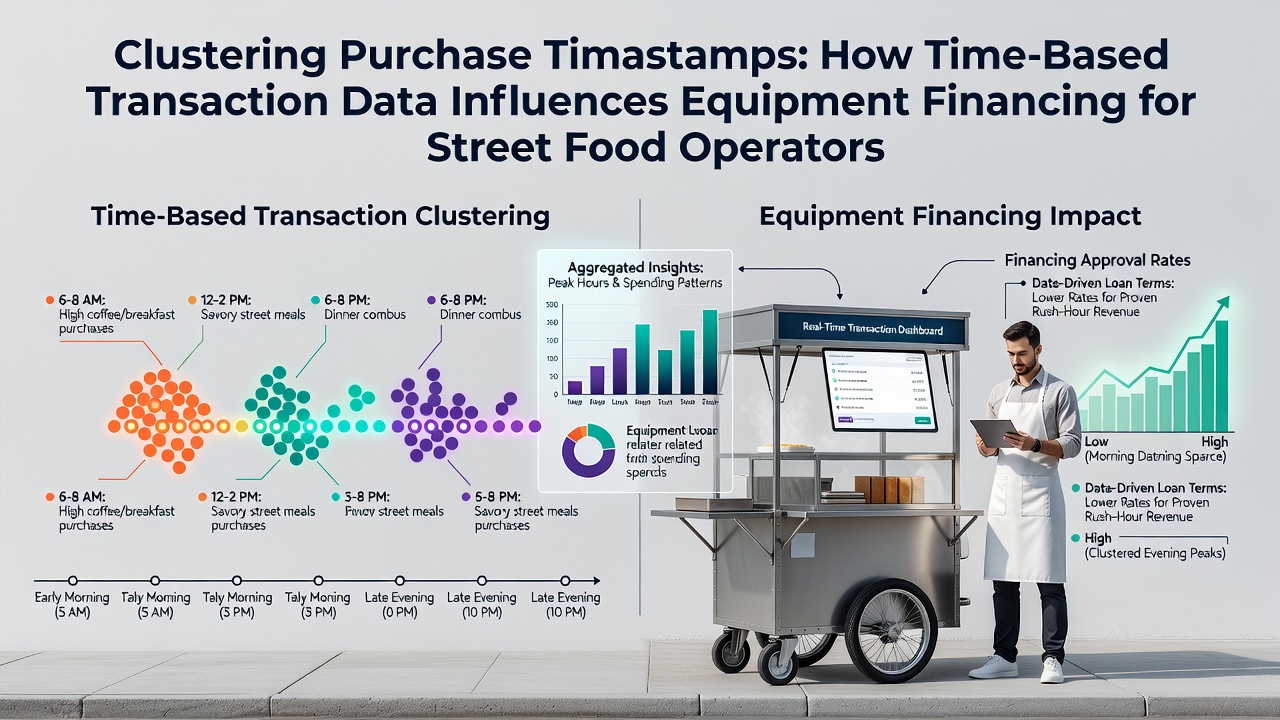
Street food operators generate transaction records that reveal distinct patterns when purchase timestamps undergo clustering analysis, and these groupings often shape how lenders evaluate requests for equipment financing such as grills, refrigeration units, or mobile carts. Clustering groups similar transaction times into segments that highlight peak activity windows, slow periods, and recurring cycles across days or weeks. Lenders examine these clusters because they provide measurable indicators of operational consistency that traditional credit metrics alone may overlook.
Timestamp Clustering Mechanics in Retail Data
Clustering algorithms sort timestamps by proximity in time, frequency, and duration between purchases, creating categories that reflect real operating rhythms. For instance, one cluster might capture midday surges between 11 a.m. and 2 p.m., while another isolates late-evening activity after 8 p.m. These groupings emerge from raw point-of-sale logs without requiring manual categorization. Data processors apply techniques such as k-means or density-based spatial clustering to identify natural boundaries in the time series, allowing patterns to surface across hundreds of individual transactions.
Street food businesses produce timestamp data that fluctuates with location permits, weather, and local events. When clusters show repeated high-volume intervals at the same times each week, financing reviewers treat this repetition as evidence of predictable cash flow. Clusters that spread unevenly or shrink over successive months may prompt requests for additional documentation before equipment loans receive approval.
Application to Street Food Transaction Patterns
Operators in urban markets frequently record tight clusters around lunch and dinner rushes, whereas those at festivals or weekend markets display broader spreads tied to event schedules. In July 2026, several municipal health departments released updated permit data showing that vendors with stable midday clusters maintained equipment utilization rates above 85 percent across three consecutive quarters. This information reaches financing platforms through aggregated, anonymized feeds that preserve individual privacy while supplying lenders with comparative benchmarks.
Take one operator in a coastal city who noticed transaction clusters shifting earlier by thirty minutes each summer due to tourist foot traffic. Lenders reviewing the adjusted clusters approved financing for an upgraded refrigeration unit because the data demonstrated sustained volume rather than seasonal spikes alone. Another vendor in an inland market saw evening clusters contract after a new competitor opened nearby; the financing request for additional cooking equipment faced extended review until new clusters stabilized around adjusted operating hours.
Influence on Equipment Financing Decisions
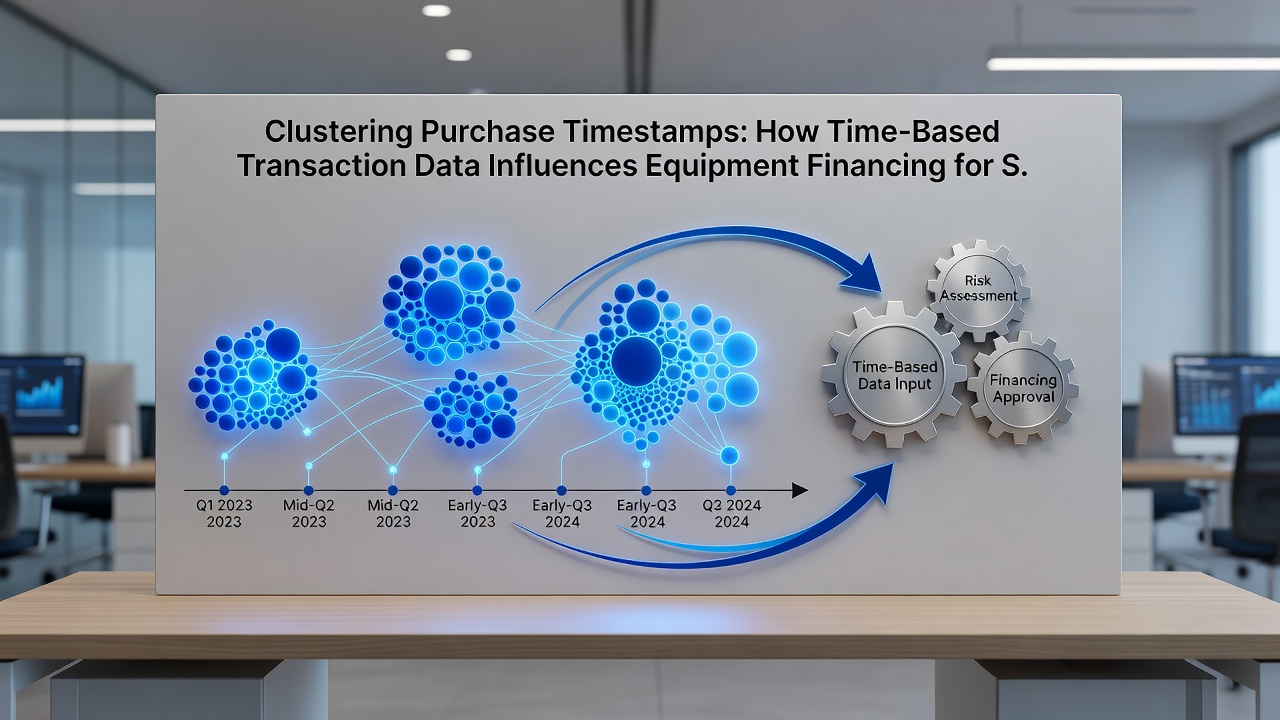
Financing institutions integrate clustered timestamp features into risk models that weigh repayment capacity. Clusters indicating consistent daily activity windows receive higher stability scores because they correlate with steady revenue generation needed to cover equipment lease or loan installments. Models also compare an applicant's cluster profile against industry averages drawn from similar vendors in comparable regions.
Research from the Australian Bureau of Statistics on small food service enterprises shows that businesses maintaining tight timestamp clusters over twelve months experience 22 percent fewer payment disruptions than those with dispersed activity patterns. Canadian government reports on micro-enterprise financing similarly note that time-based data improves approval accuracy for asset-backed loans when combined with standard financial statements. Lenders therefore request timestamp exports alongside bank records during the underwriting process.
Equipment suppliers have begun embedding timestamp export tools in point-of-sale hardware sold to street vendors, streamlining data transfer to financing partners. This integration reduces processing delays because clusters can be generated automatically rather than reconstructed from paper receipts. Observers note that vendors who maintain clean timestamp logs complete financing applications in fewer steps than those relying on manual summaries.
Regional Variations and Data Sources
European regulatory frameworks encourage standardized timestamp formatting for small retail operators seeking cross-border financing, while U.S. programs administered through the Small Business Administration incorporate optional time-series attachments in certain equipment loan applications. Academic studies published by research teams at the University of Toronto have examined how clustering density affects perceived risk in informal food markets, revealing measurable differences in approval timelines across tested datasets.
These geographic differences matter because street food regulations and operating hours vary widely. A vendor operating under strict curfew rules may display compressed clusters compared with one in a 24-hour district, yet both can demonstrate viability when clusters remain consistent within their respective constraints.
Conclusion
Timestamp clustering converts raw transaction times into structured inputs that financing providers use to assess equipment funding requests for street food operators. Consistent clusters signal operational reliability that supports repayment projections, while variable patterns invite closer scrutiny. As data collection tools become standard in point-of-sale systems, the role of time-based analysis continues to expand within equipment financing workflows for this sector.