10 Jul 2026
Cross-Border Receipt Archiving Standards and Their Role in Streamlining Multi-Jurisdictional Tax Filings for Export-Focused Boutiques
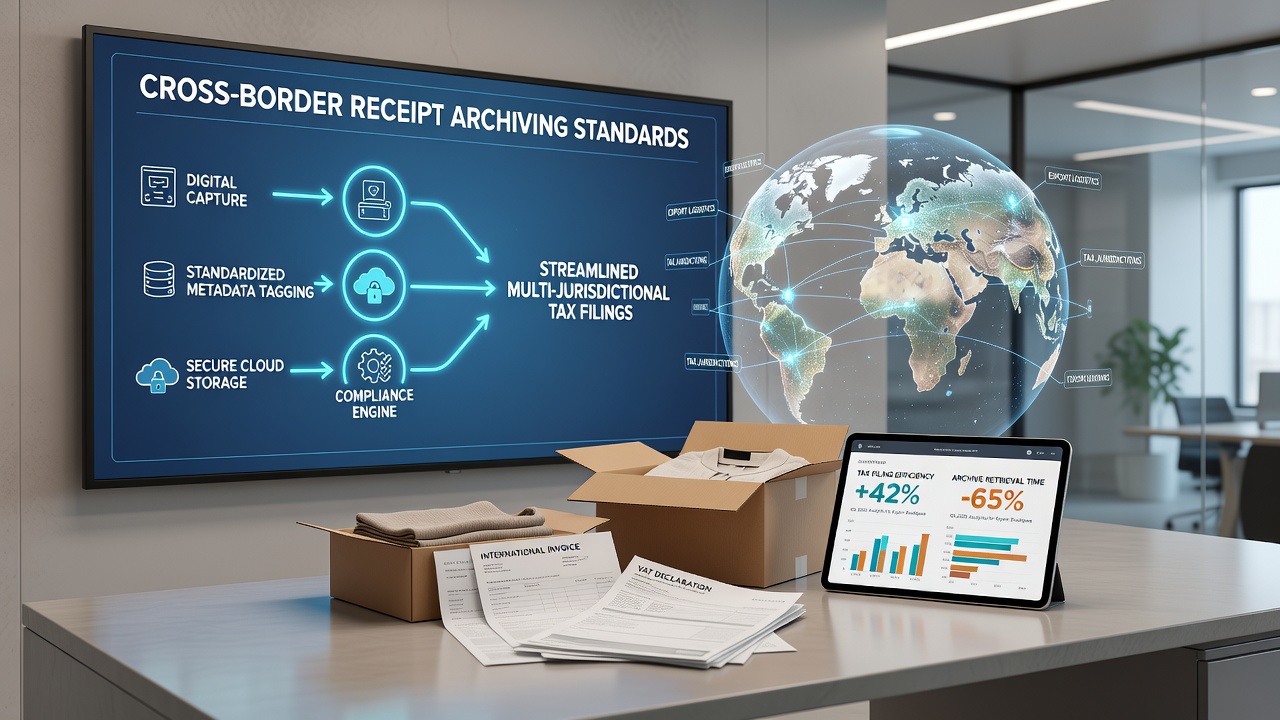
Export-focused boutiques operate across multiple jurisdictions where receipt management directly affects tax accuracy and filing efficiency. Standards for cross-border receipt archiving establish uniform protocols that allow businesses to store, retrieve, and validate transaction documents in formats accepted by tax authorities worldwide. These frameworks emerged from coordinated efforts by organizations seeking to reduce discrepancies in value-added tax and goods-and-services tax reporting when goods cross borders.
Defining Receipt Archiving Standards in International Trade
Receipt archiving standards specify requirements for data integrity, retention periods, and accessibility that satisfy diverse regulatory environments. Bodies such as the OECD provide model rules that member countries adapt into national legislation while the Canada Revenue Agency outlines electronic record-keeping rules that align with similar guidelines in the European Union. Boutiques selling apparel or artisanal goods to overseas customers must maintain receipts that include buyer location, currency conversion details, and applicable tax rates at the time of sale. Standardized metadata fields within these records enable automated matching between export declarations and import tax claims, which reduces manual reconciliation during audits.
Application to Multi-Jurisdictional Tax Filings
When boutiques export to customers in several countries, each jurisdiction imposes its own documentation thresholds and filing deadlines. A unified archiving system stores original transaction data alongside translated summaries and exchange-rate references so that a single source feeds reports for multiple authorities. Research from the Australian Taxation Office indicates that businesses adopting consistent digital formats experience fewer adjustments during cross-border reviews because records remain unaltered and timestamped from the point of sale. In practice, software platforms that comply with these standards generate jurisdiction-specific extracts without requiring separate data entry for each market.
Operational Benefits for Export-Focused Boutiques
Boutiques gain measurable efficiency when receipt records follow recognized standards rather than ad-hoc storage methods. Automated validation checks flag missing fields before filings occur, which shortens preparation cycles that once stretched across weeks. Data from integrated platforms shows that export-oriented retailers handling shipments to five or more countries reduce filing errors by maintaining centralized archives that update in real time as new transactions arrive. Staff no longer search scattered folders or email threads because standardized indexes allow queries by date range, destination country, or tax category within seconds.

Key Standards and Their Geographic Reach
Several frameworks intersect in cross-border operations. The OECD's guidelines on electronic commerce taxation emphasize machine-readable formats and audit trails that many jurisdictions now require. Within the European Union, the VAT Directive sets minimum retention periods and digital signature rules that boutiques must satisfy when selling to consumers in member states. Canada's approach through the CRA focuses on system reliability and backup procedures that prevent data loss during international audits. Observers note that alignment between these rules allows boutiques to implement one archiving solution that satisfies primary markets without creating duplicate repositories for each region.
Implementation Patterns Observed in 2026
By July 2026 many boutique operators had completed migrations to cloud platforms certified against multiple national standards simultaneously. These systems automatically apply jurisdiction-specific retention rules while preserving a master copy that meets the longest requirement among active markets. Case examples include apparel exporters who integrated receipt archiving directly with shipping software so that customs documentation and tax records populate from the same transaction feed. This linkage eliminates gaps that previously appeared when separate teams handled logistics and accounting records.
Challenges Addressed Through Standardization
Currency fluctuations and differing tax treatments create complexity that standards mitigate through prescribed conversion protocols and tax code mappings. Boutiques previously faced delays when authorities requested original receipts in native formats that legacy systems could not export cleanly. Standardized archiving now supports export in required structures such as XML or JSON schemas accepted across borders. Those who've studied compliance patterns report that consistent metadata reduces follow-up requests from tax offices because records already contain the verification elements each jurisdiction prioritizes.
Conclusion
Cross-border receipt archiving standards provide the structural foundation that export-focused boutiques rely on to meet obligations across multiple tax systems. By embedding uniform requirements for storage, access, and validation into everyday operations, these frameworks convert fragmented transaction data into coherent filings that satisfy authorities in different regions. Continued adoption of certified platforms through 2026 demonstrates measurable reductions in preparation time and error rates for businesses managing international sales.