16 Aug 2026
Cross-Platform Transaction Logs as Foundations for Tailored Capital Offers in Specialty Retail Networks
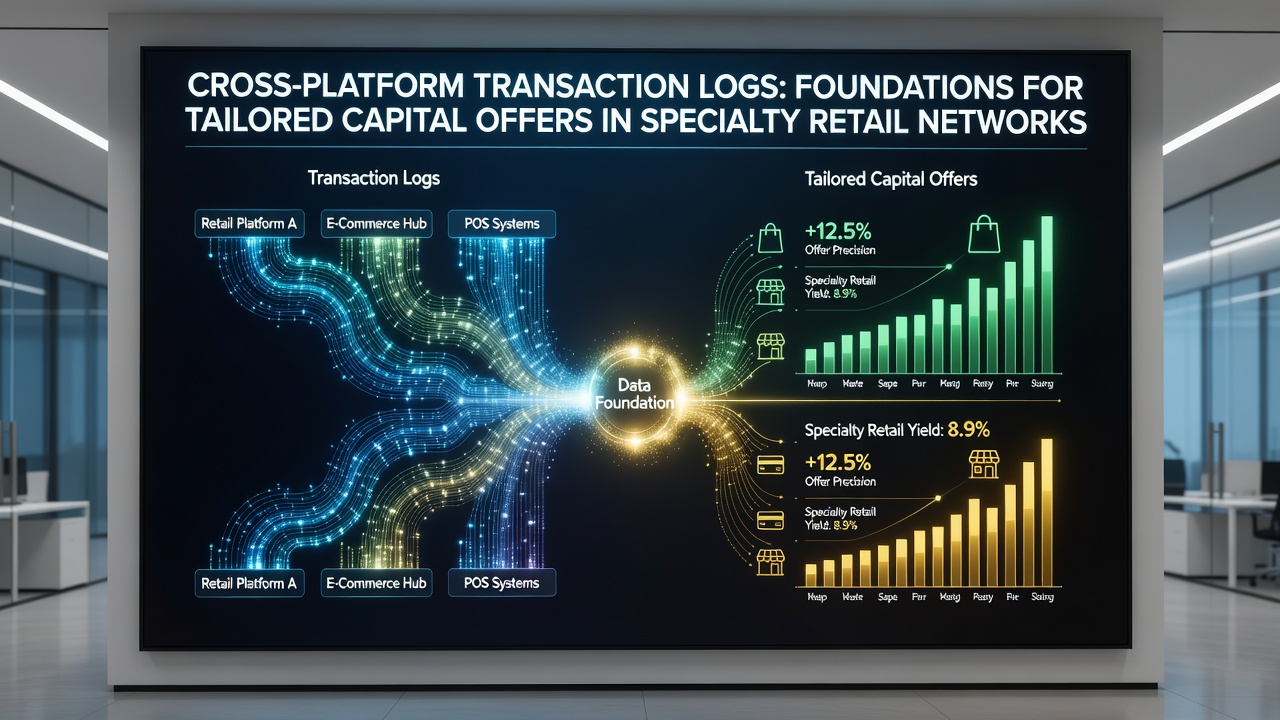
Specialty retail networks rely on transaction logs that span multiple sales channels to build accurate profiles of business activity, and these records now serve as core inputs for customized capital offers from lenders and financing partners. Observers note that logs collected from in-store terminals, e-commerce platforms, and mobile applications create unified datasets that capture sales volume, customer frequency, and seasonal patterns across locations.
Data Integration Across Retail Channels
Transaction logs from different platforms merge into centralized repositories where software tools reconcile timestamps, product categories, and payment types without requiring separate reconciliation steps for each source. Researchers at institutions such as the OECD have documented how multi-channel records improve visibility into revenue consistency for boutiques and niche product sellers who operate both physical outlets and online storefronts. As of August 2026, several European retail associations report increased adoption of shared log standards that allow lenders to review 24-month histories drawn from all channels simultaneously.
Elements Captured in Unified Logs
- Daily sales totals segmented by product line and store location
- Return rates and inventory turnover tied to specific transaction entries
- Customer repeat purchase intervals recorded across web and physical touchpoints
- Promotional campaign results linked to corresponding revenue spikes
These elements combine to form a longitudinal view that financing providers use when assessing risk and determining offer parameters such as advance amounts, repayment schedules, and interest structures. One study released by Statistics Canada in 2025 showed that specialty retailers supplying cross-platform logs received capital terms aligned more closely with their actual cash-flow cycles than those submitting single-channel summaries.
Application to Capital Offer Customization
Lenders analyze aggregated logs to identify stable revenue streams and adjust capital offers accordingly, often extending higher advance percentages to networks that demonstrate balanced performance across channels. Data from the U.S. Federal Reserve indicates that by mid-2026, merchant financing programs increasingly request API access to these unified logs during application reviews, replacing older methods that relied on summarized bank statements alone. The process allows providers to model repayment capacity based on granular daily or weekly patterns rather than monthly aggregates.
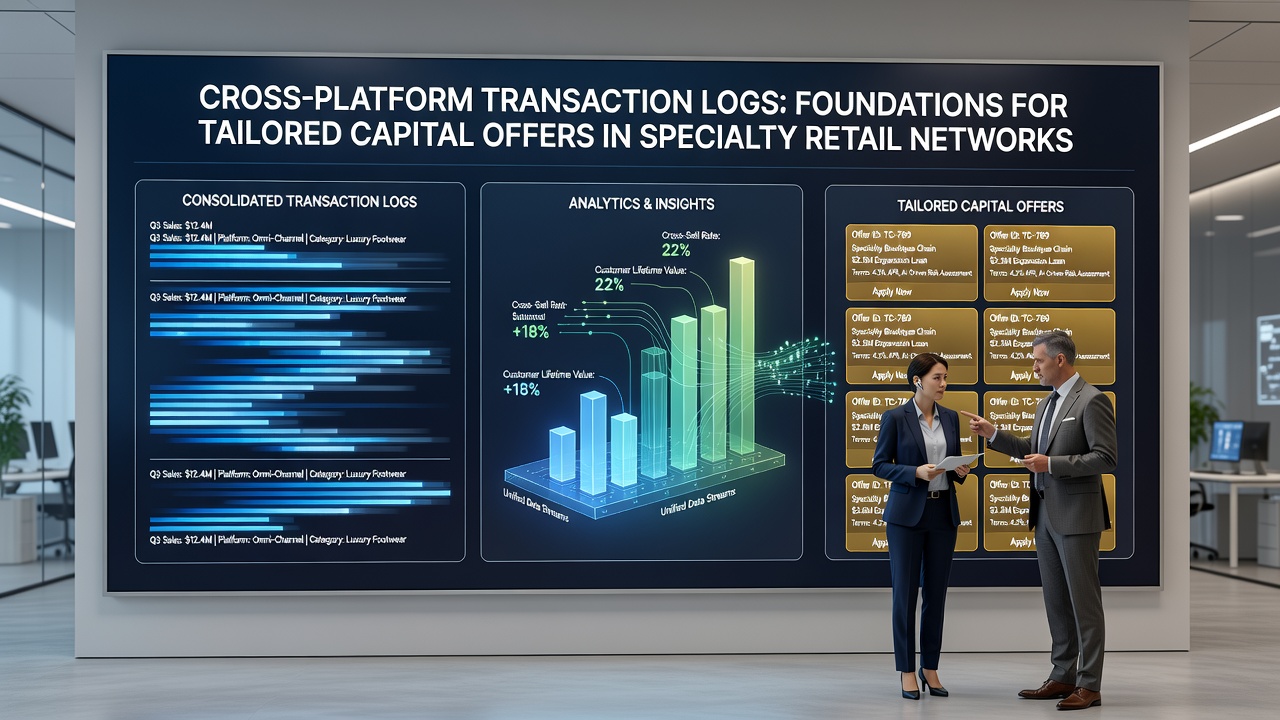
Specialty retailers in categories such as outdoor equipment, artisanal foods, and independent fashion have participated in pilot programs where log-derived metrics directly influenced the structure of revolving credit facilities. Australian Bureau of Statistics figures released in early 2026 highlighted that networks maintaining consistent log formats across platforms experienced faster approval times when applying for supplier financing or expansion loans. The records also support scenario modeling that forecasts how new product introductions or location expansions might affect future capital eligibility.
Technical Requirements and Standards
Implementation requires standardized data fields and secure transfer protocols so that logs from disparate systems remain comparable and auditable. Industry groups including the National Retail Federation have issued guidelines that specify minimum fields for cross-platform compatibility, covering currency conversion, tax components, and channel identifiers. Retail technology vendors now embed export functions that format logs according to these specifications, reducing manual preparation time for financing applications.
Network operators who adopt these standards report that their transaction histories become portable across multiple capital providers, allowing comparison of offers without repeated data extraction efforts. European Commission retail monitoring reports from 2025 note that standardized log formats correlate with broader access to tailored financing products among small and mid-sized specialty chains operating in multiple countries.
Future Developments in Log Utilization
Continued refinement of analytics platforms will likely expand the use of cross-platform logs beyond initial risk assessment into ongoing monitoring of financed retailers. Academic papers from business schools in Canada and Australia describe emerging models that update capital terms dynamically as new log entries arrive, creating feedback loops between operational performance and financing conditions. Such approaches depend on continued investment in data infrastructure that maintains accuracy and security across all participating retail channels.
Conclusion
Cross-platform transaction logs supply the detailed, multi-source evidence that supports customized capital offers for specialty retail networks. As integration standards mature and more providers incorporate these records into their evaluation processes, retailers gain clearer pathways to financing structured around their actual multi-channel performance. Ongoing developments in data standards and analytics tools continue to shape how these logs translate into practical capital access.