31 Jul 2026
Mapping Authorization Failures Across Digital Checkout Flows to Refinement of Risk Models Used by Alternative Lending Platforms for Retail Operators
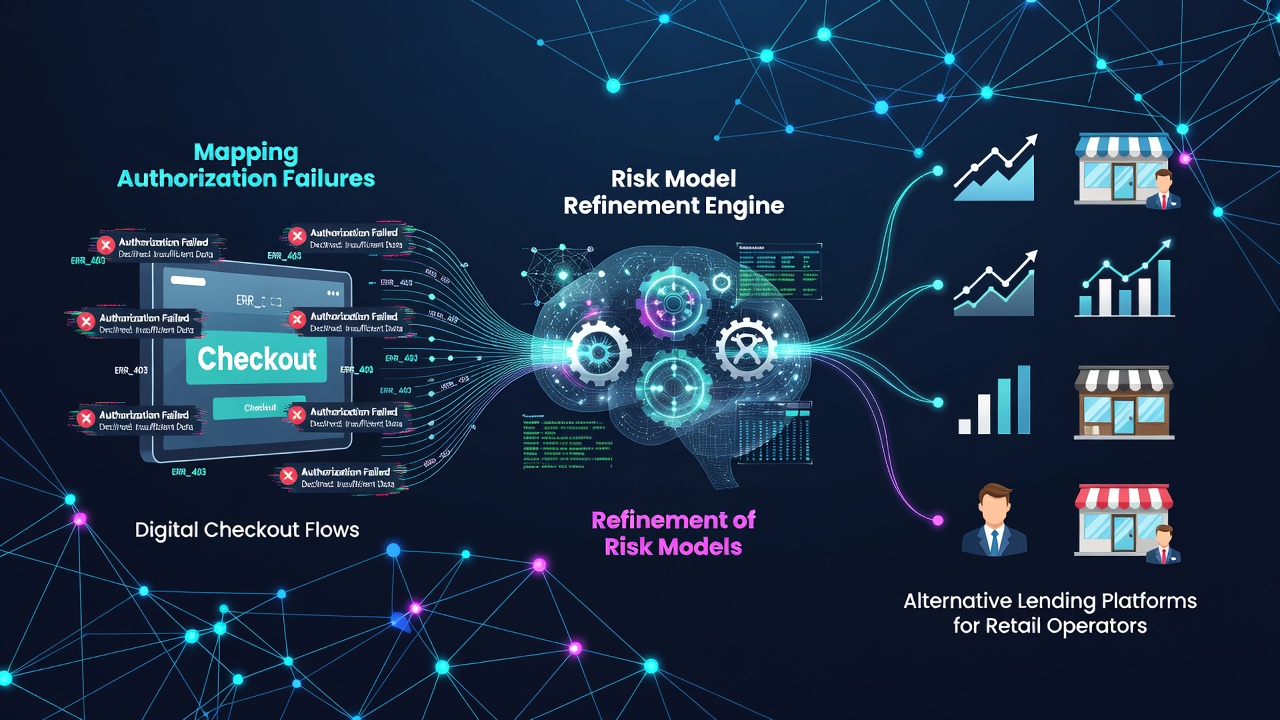
Data from authorization failures in digital checkout systems provides alternative lending platforms with granular signals that help refine risk assessments for retail operators seeking capital. These failures occur when payment processors reject transactions due to insufficient funds, mismatched details, or suspected fraud, and analysts track the frequency, timing, and patterns across merchant accounts to build more precise models.
Retail operators generate thousands of checkout attempts daily, and each decline carries metadata that lending algorithms parse alongside traditional credit metrics. Platforms collect variables such as decline rates during peak hours, recovery success on retry attempts, and correlations between failures and inventory turnover cycles, then feed these inputs into machine learning frameworks that adjust borrower scores in real time.
Patterns Emerging from Checkout Data Streams
Studies conducted by payment networks reveal that clusters of authorization failures often precede cash flow disruptions in small retail businesses, allowing lenders to identify elevated risk earlier than quarterly financial statements would indicate. Researchers at institutions including the Federal Reserve Bank of New York have documented how sequential declines in specific product categories correlate with seasonal demand shifts, prompting platforms to incorporate seasonal weighting factors into their underwriting tools.
Alternative lenders integrate this checkout intelligence with point-of-sale records to distinguish between temporary processing hiccups and structural liquidity shortfalls. When a boutique clothing store experiences repeated failures on high-value items while low-value transactions clear consistently, models interpret the pattern as potential pricing misalignment rather than broad credit deterioration, which leads to differentiated loan terms instead of outright rejection.
Refinement Mechanisms in Lending Algorithms
Platforms apply mapping techniques that overlay authorization failure locations within the checkout funnel onto borrower profiles. A decline at the address verification stage might signal operational issues with customer data management, whereas failures at the final authorization gateway often trace back to banking relationships that require closer scrutiny during loan reviews. These layered mappings allow risk engines to recalibrate thresholds dynamically as new decline data arrives.

By July 2026, several platforms expect to complete integrations that pull anonymized decline datasets directly from major gateways, accelerating the feedback loop between checkout performance and capital allocation decisions. This development builds on earlier pilots where lenders observed measurable improvements in default prediction accuracy after incorporating failure pattern variables.
Geographic and Sector Variations in Data Application
European regulators through the European Central Bank have highlighted similar data linkages in reports examining SME financing, noting that digital-first retailers in the euro area show stronger correlations between authorization metrics and subsequent borrowing outcomes compared with traditional brick-and-mortar operators. Australian Securities and Investments Commission guidance similarly encourages fintech lenders to validate risk models against transaction-level signals, including those derived from failed payments.
Specialty retailers such as craft vendors and event-based sellers exhibit distinct failure signatures that refined models now isolate. A spike in authorization rejections during promotional campaigns, for instance, may reflect temporary volume surges rather than underlying solvency concerns, so algorithms apply temporary overrides once historical recovery rates confirm the pattern.
Observers note that combining authorization failure maps with external economic indicators produces composite scores that better forecast repayment capacity for operators who lack extensive credit histories. This approach has expanded access to working capital for retailers whose primary transaction activity occurs through mobile and web channels rather than legacy banking relationships.
Conclusion
The systematic mapping of authorization failures continues to supply alternative lending platforms with actionable inputs that sharpen risk differentiation across retail segments. As data flows between checkout systems and financing models grow more interconnected, platforms gain capacity to tailor credit products that align more closely with the operational realities of individual merchants.