29 May 2026
Mobile Payment Trends Shaping Niche Financing Pathways for Regional Vendors
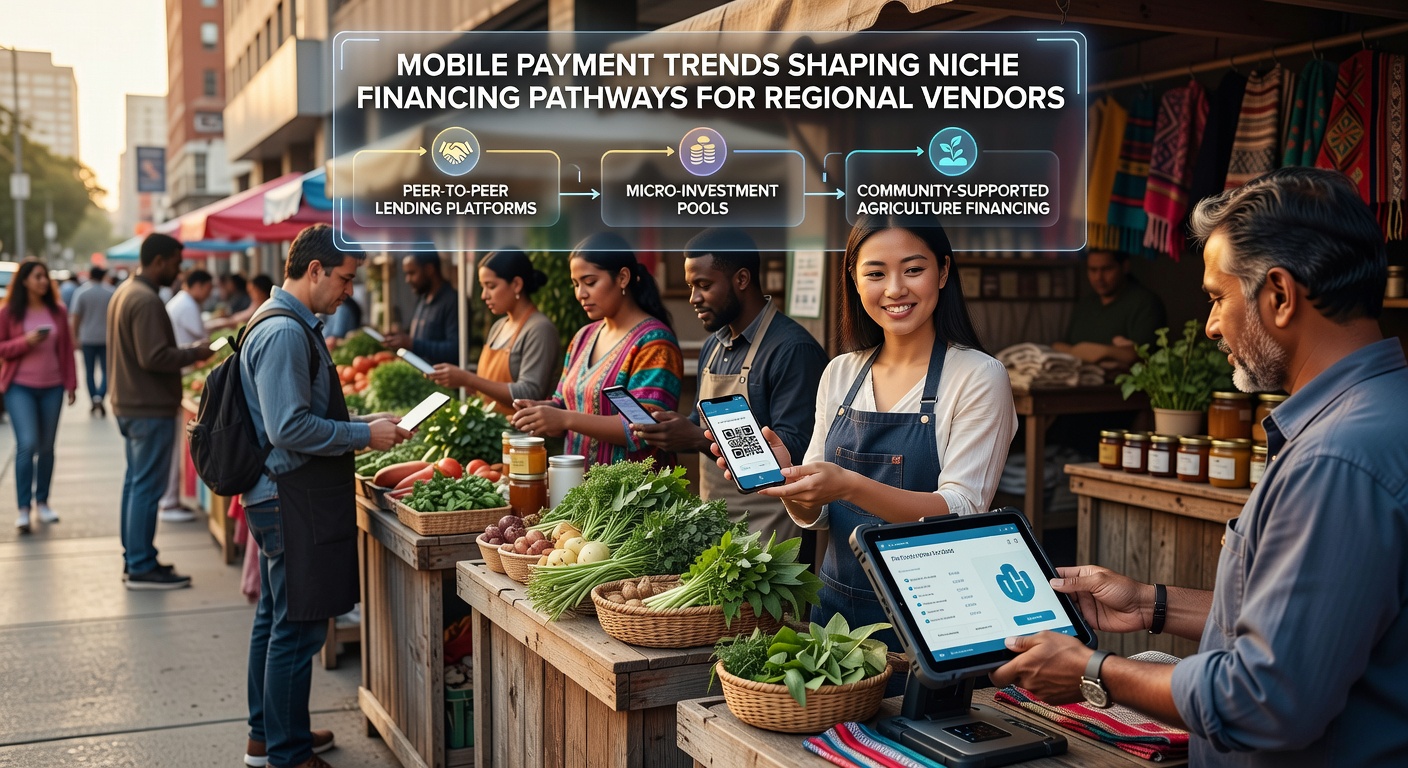
Regional vendors across multiple continents continue to adopt mobile payment systems at accelerating rates, and this shift creates direct connections to specialized financing options that rely on real-time transaction data rather than traditional credit evaluations. Mobile wallets, contactless terminals, and app-based invoicing tools generate granular records of daily sales that fintech providers and regional banks use to assess repayment capacity for short-term advances and inventory loans.
Expansion of Mobile Transaction Infrastructure
By May 2026, adoption metrics from various regulatory bodies show that contactless and QR-code payments account for over 60 percent of point-of-sale activity among small vendors in mid-sized urban centers outside major metropolitan hubs. These systems reduce cash-handling costs while producing timestamped sales figures that feed directly into algorithmic underwriting models. Vendors who previously relied on seasonal bank loans now access micro-advances within hours of completing mobile transactions, because the payment processors share anonymized aggregates with approved lenders under data-sharing agreements.
Countries in Southeast Asia and parts of Latin America lead this integration, where governments have rolled out subsidized mobile payment terminals for agricultural and craft vendors. The Monetary Authority of Singapore published figures indicating that vendor participation in mobile-linked financing programs grew 34 percent year-over-year through early 2026, driven by APIs that connect daily receipts to working-capital products. Similar patterns appear in reports from the Reserve Bank of Australia, which track how regional food-truck operators and market-stall owners convert mobile sales streams into supply-chain credit lines.
Data Trails and Alternative Credit Scoring
Payment processors capture variables such as transaction frequency, average ticket size, and geographic consistency, then package these into risk profiles that differ from conventional FICO-style assessments. Regional vendors gain access to financing tiers previously unavailable because the mobile data reveals cash-flow stability that static balance sheets often miss. One documented pathway involves vendors receiving inventory financing offers automatically when mobile terminal activity exceeds preset thresholds for consecutive weeks, with repayment automatically deducted from future mobile receipts.
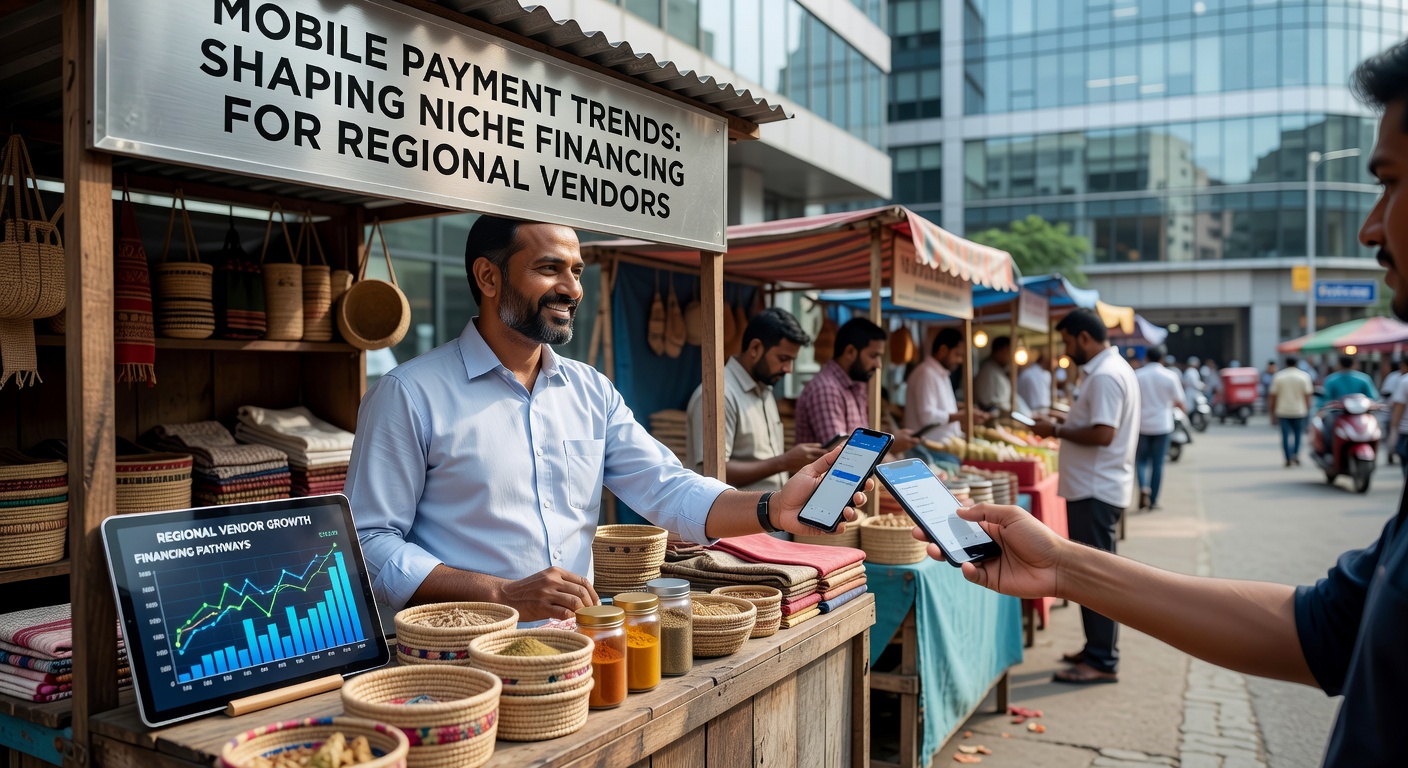
Observers note that this model reduces application friction, because vendors authorize data pulls directly through their existing payment apps instead of submitting paper ledgers. Research from the World Bank’s digital economy unit highlights how such systems have expanded credit access for vendors operating in markets with limited formal banking infrastructure, particularly where mobile money accounts serve as both payment rails and collateral verification tools.
Regional Variations in Product Design
Financing products tied to mobile payments take distinct forms depending on local regulations and vendor density. In parts of Eastern Europe, cooperative banks partner with mobile operators to offer revolving credit lines secured against aggregated daily receipts from multiple vendor locations. In contrast, several Canadian provinces have seen provincial development agencies pilot programs that match mobile transaction volume with matching grants for equipment upgrades, creating hybrid public-private pathways.
Vendors in coastal tourism regions often combine mobile payments with seasonal forecasting tools that adjust advance amounts based on historical mobile sales spikes during peak visitor months. These adjustments rely on machine-learning models trained on anonymized data sets shared under regulatory sandboxes, allowing lenders to calibrate offers without requiring vendors to forecast demand manually.
Integration with Supply-Chain Partners
Mobile payment platforms increasingly interface with supplier portals so that confirmed sales trigger automatic purchase-order financing. A vendor who processes a bulk order through a mobile terminal can receive immediate confirmation that raw materials will be released on credit, because the processor verifies the incoming payment stream in real time. This closed-loop approach shortens the cash-conversion cycle for regional manufacturers who previously waited weeks for bank approvals.
Industry analyses from the European Central Bank indicate that such integrations have lowered average days-sales-outstanding for participating vendors by 12 to 18 days in tracked pilot cohorts. The same data streams also support dynamic pricing models where vendors adjust markups based on real-time mobile demand signals, indirectly strengthening their eligibility for larger financing facilities.
Regulatory Frameworks Supporting Data Portability
Legislation in multiple jurisdictions now mandates that payment processors provide vendors with portable transaction histories in standardized formats. This portability enables vendors to shop financing offers across competing lenders without duplicating paperwork. Regulators in the EU and Canada have introduced guidelines requiring clear consent screens before any data transfer occurs, which has increased vendor participation rates in niche financing programs.
These frameworks also establish audit trails that protect vendors from unauthorized sharing while allowing third-party analysts to verify the accuracy of risk models. As a result, regional vendors gain negotiating leverage when discussing terms with multiple capital providers who compete on the basis of transparent mobile-derived metrics.
Conclusion
Mobile payment trends continue to generate new financing pathways by converting everyday transaction records into verifiable credit signals for regional vendors. The infrastructure expansions documented through May 2026, combined with evolving data-portability rules and supply-chain integrations, illustrate how payment rails now serve dual roles as both revenue channels and financing gateways. Continued adoption across diverse geographic markets suggests these connections will expand further as terminal penetration and regulatory clarity increase.