17 Jun 2026
Pattern Recognition in Recurring Billing Data Streams Guiding Custom Financing Terms for Subscription-Based Retail Ventures
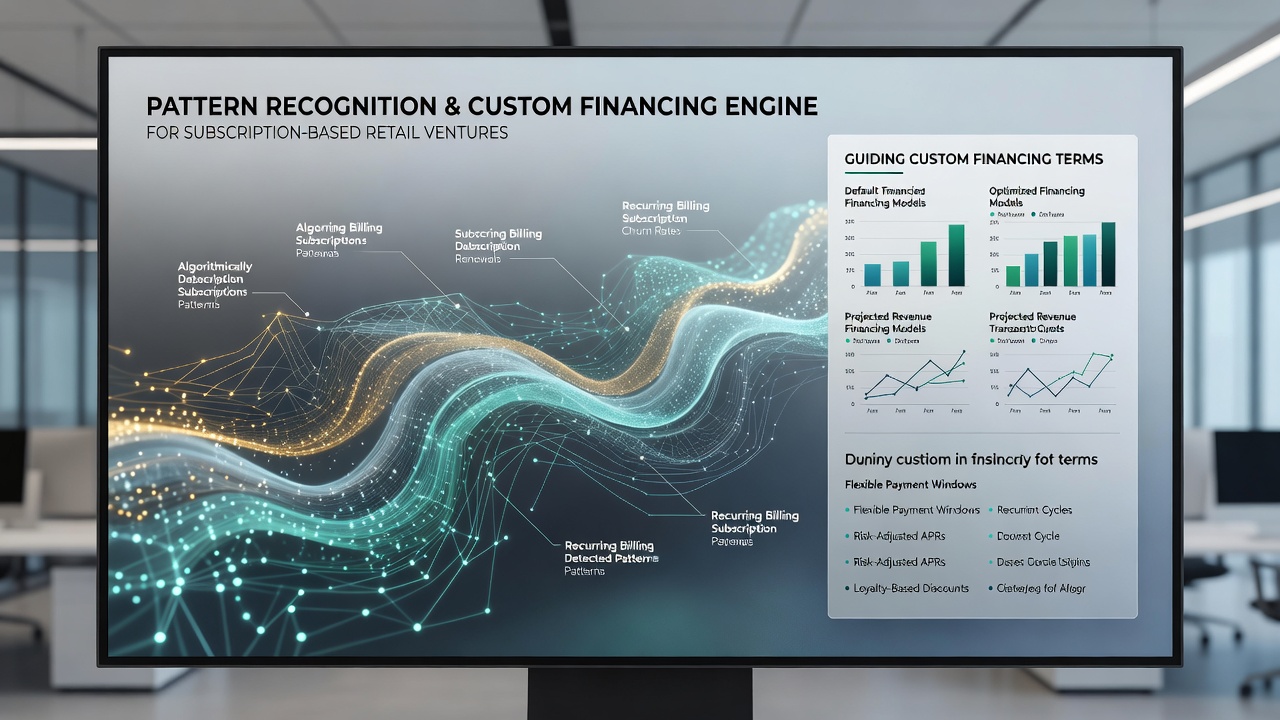 Retail ventures built around subscriptions generate continuous streams of billing data that extend far beyond simple transaction logs, and analysts now apply pattern recognition techniques to extract signals about business stability. These techniques scan sequences of renewal dates, payment amounts, and customer tenure intervals to identify clusters that correlate with predictable cash flows. Lenders examine the resulting clusters when they set repayment schedules or interest tiers tailored to each venture's profile. Subscription models in retail cover areas such as meal kits, apparel boxes, and digital content bundles, each producing its own rhythm of recurring charges. Pattern recognition systems track metrics including average interval between successful payments, frequency of plan upgrades, and rate of involuntary churn caused by failed authorizations. When these metrics align into recognizable shapes, financing providers adjust term lengths or advance percentages accordingly.
Mechanics of Pattern Detection in Billing Streams
Algorithms process time-series data from billing platforms by converting raw logs into feature vectors that capture seasonality, cohort retention curves, and variance in monthly recurring revenue. Clustering methods group similar subscriber behaviors while anomaly detection flags sudden shifts in payment success rates. Retailers that maintain steady upgrade patterns across multiple cohorts receive financing structures with longer grace periods because the detected stability reduces projected default exposure.
June 2026 saw several fintech platforms release updated toolkits that integrate these pattern outputs directly into loan origination dashboards, allowing underwriters to simulate term adjustments based on live billing feeds. The updates focused on handling multi-currency subscriptions common among cross-border retail operations, where exchange-rate fluctuations can mask or exaggerate underlying customer retention signals.
Translation of Detected Patterns into Financing Terms
Once patterns emerge, lenders map them to custom parameters such as drawdown limits tied to minimum monthly recurring revenue thresholds or step-down interest rates triggered when renewal rates exceed defined benchmarks. A venture showing tight clustering around quarterly renewal peaks might qualify for inventory financing that aligns repayment dates with those peaks, reducing the need for bridge loans during slower months.
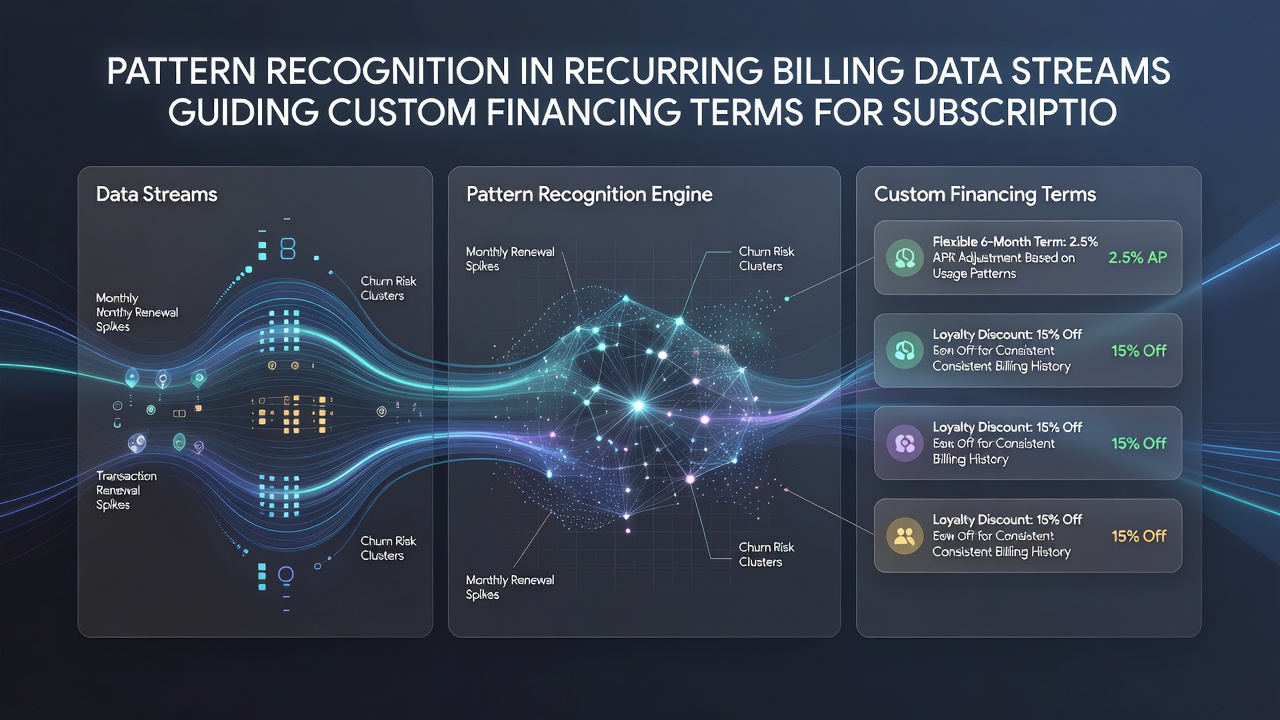
Research from the University of Melbourne's Centre for Business Analytics indicates that subscription retailers with low variance in inter-payment intervals secure financing at rates averaging 1.8 percentage points below those offered to peers with erratic billing sequences. The same study tracked how pattern-derived risk scores influenced approval volumes across Australian and New Zealand markets between 2024 and 2026.
Integration with Broader Data Ecosystems
Billing stream analysis does not operate in isolation. Platforms combine recognized patterns with inventory turnover data and customer acquisition costs to refine financing offers further. When pattern recognition identifies a cohort of subscribers who consistently add accessories to their recurring orders, lenders may extend working-capital lines sized to support accelerated product development cycles. This layered approach keeps terms responsive to both revenue predictability and operational expansion signals.
European regulatory guidance issued in early 2026 encouraged greater transparency around the data elements feeding these recognition models, prompting vendors to publish summary statistics on the billing features most heavily weighted in their scoring engines. The move aimed to help subscription retailers understand which behavioral patterns most directly affect their eligibility for customized capital products.
Case Illustrations from Retail Segments
One apparel subscription service demonstrated consistent month-over-month growth in average order value across its three-year billing history. Pattern analysis revealed that customers who renewed within a narrow seven-day window after their anniversary date rarely downgraded plans afterward. Financiers responded by offering a term loan whose repayment cadence mirrored that anniversary cluster, allowing the retailer to time marketing spend with incoming revenue without additional short-term facilities.
Another example involves a specialty coffee subscription retailer whose billing data showed distinct regional clusters, with urban subscribers exhibiting higher upgrade frequency but also higher involuntary churn. Recognition systems isolated these regional signatures, enabling the lender to segment the financing package into separate tranches with risk-adjusted pricing for each geography.
Conclusion
Pattern recognition applied to recurring billing streams continues to supply subscription-based retailers with pathways to financing terms that reflect the actual cadence of their revenue. As platforms refine detection methods and regulatory frameworks clarify data usage, the connection between billing sequences and capital access grows more precise. Retailers that maintain clean, high-resolution billing records position themselves to benefit from these tailored arrangements.