31 Aug 2026
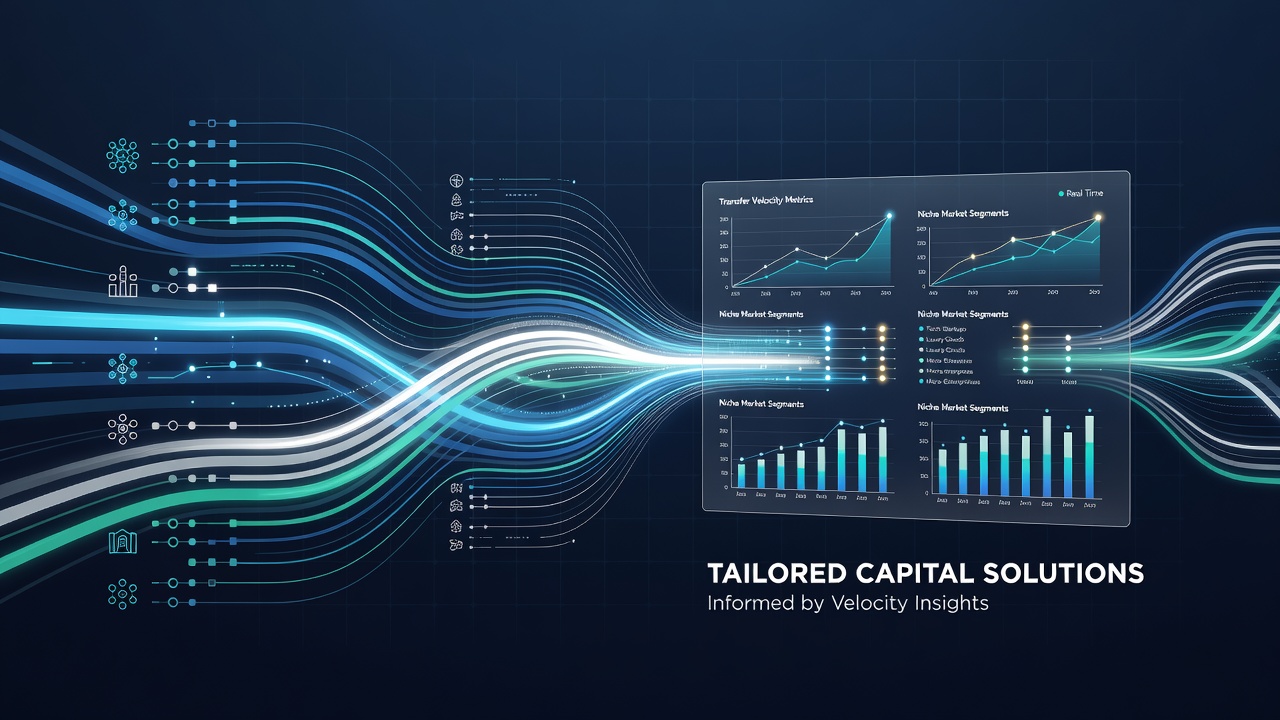
Velocity Patterns in Electronic Fund Transfers Informing Tailored Capital Solutions for Niche Market Operators

Electronic fund transfers generate detailed velocity data that tracks the speed and frequency of incoming and outgoing payments, and financial institutions increasingly rely on these metrics to design capital products suited to niche market operators such as regional artisans, seasonal agricultural suppliers, and specialized service providers. Observers note that velocity captures not only total volume but also the timing between transactions, which reveals operational rhythms that standard balance sheets often overlook. Researchers at several academic centers have documented how consistent high-velocity inflows correlate with steadier cash cycles, while irregular patterns signal potential gaps that lenders address through adjustable repayment schedules.
Defining Velocity Metrics in Electronic Transfers
Velocity in this context measures the rate at which funds move through accounts over defined intervals, typically calculated daily or weekly, and banks combine these figures with historical transfer counts to build risk profiles. Data from the Federal Reserve Bank of New York shows that businesses maintaining transfer intervals under 48 hours often qualify for shorter-term facilities with lower origination fees, whereas those exhibiting longer gaps receive products featuring grace periods aligned to their documented cycles. Analysts at the Bank of Canada have tracked similar patterns across cross-border transfers and report that velocity thresholds help differentiate between steady niche operators and those experiencing external disruptions such as supply chain delays.
Application to Niche Market Financing
Capital providers integrate velocity signals into underwriting algorithms that adjust advance amounts and interest structures in real time, and this approach allows niche operators to access funds without traditional collateral requirements. One documented case involved a group of Pacific Northwest craft producers whose weekly transfer velocity remained stable despite seasonal dips in volume; their lender extended a revolving facility that scaled automatically with velocity upticks detected in August 2026. Another example from Australian specialty food distributors illustrates how velocity drops lasting more than five days triggered temporary rate reductions rather than outright declines, preserving access during harvest transitions.
Integration with Broader Transaction Streams
Velocity analysis extends beyond isolated transfers when platforms link EFT records to point-of-sale and invoice data, creating composite scores that inform dynamic pricing of capital. European Central Bank reports from mid-2025 onward indicate that multi-channel operators using such combined metrics secured financing terms reflecting actual throughput rather than static revenue projections. Those who studied these systems observe that the resulting products often include velocity-triggered covenants, which release additional tranches once transfer frequency exceeds preset benchmarks for consecutive periods.
Regulatory and Infrastructure Developments
Regulatory frameworks in several jurisdictions now require disclosure of velocity-based criteria in lending agreements, and this transparency helps niche operators understand eligibility factors before submitting applications. The Australian Securities and Investments Commission issued guidance in early 2026 clarifying how velocity data must be presented to avoid misleading representations about approval likelihood. Infrastructure upgrades at major clearing houses have reduced settlement times, which in turn sharpens velocity calculations and enables more granular tailoring of capital solutions for operators whose transaction patterns previously appeared too fragmented for standard products.
Future Trajectory and Data Expansion
Continued expansion of real-time payment rails is expected to increase the granularity of velocity measurements available to capital providers, and pilot programs launched in 2026 already demonstrate how sub-daily velocity feeds can support micro-advances repaid within the same transfer cycle. Academic studies from institutions in Canada and the European Union continue to examine correlations between velocity stability and default rates across niche sectors, supplying datasets that refine predictive models used by non-bank lenders. Operators who maintain consistent electronic transfer activity therefore position themselves to benefit from an expanding range of customized facilities calibrated directly to their observed movement patterns.
Conclusion
Velocity patterns extracted from electronic fund transfers supply objective inputs that capital providers convert into financing structures matched to the operational realities of niche market operators. As settlement systems evolve and regulatory clarity increases, the linkage between transfer dynamics and tailored capital access continues to strengthen without requiring subjective assessments of business narratives. Data collected through August 2026 and beyond will likely expand the precision of these connections across additional geographic and sectoral contexts.