19 Jun 2026
Wearable Device Checkouts and Their Role in Refining Risk Models for Boutique Operator Capital Requests
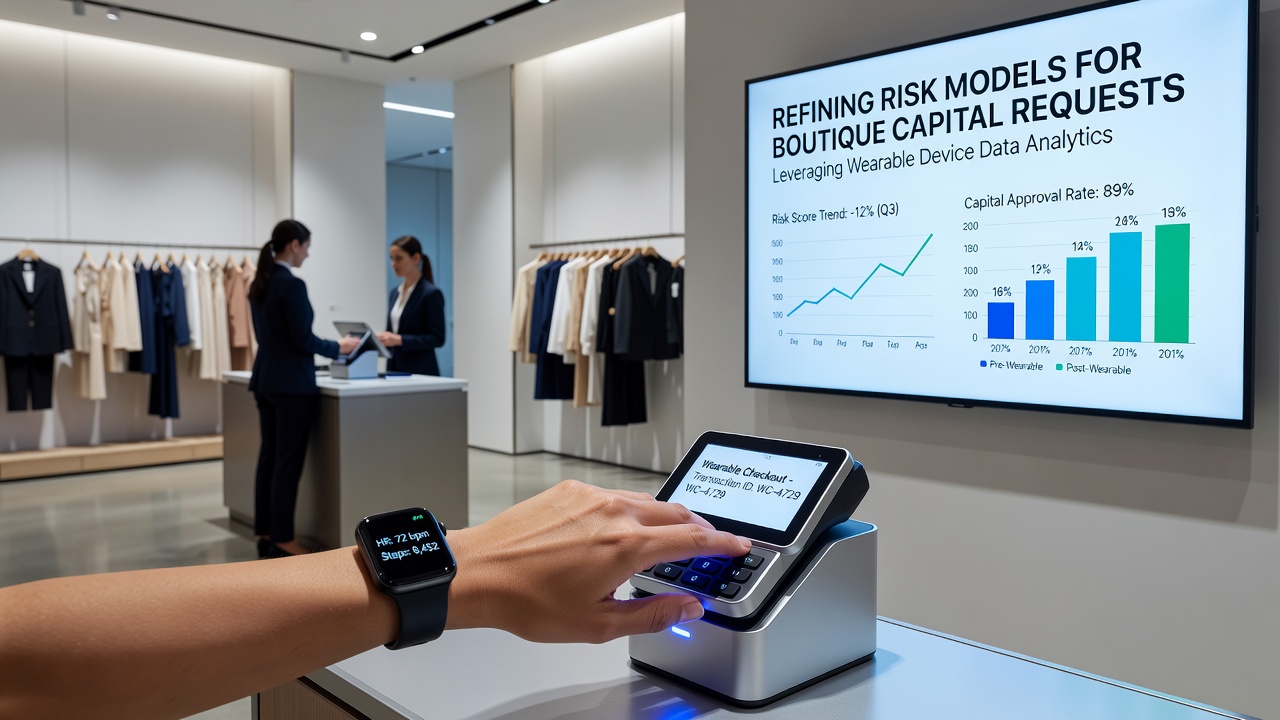
Wearable device checkouts have expanded beyond basic contactless payments to generate detailed transaction streams that feed directly into risk assessment frameworks used by lenders evaluating boutique operators, and this integration allows capital providers to draw on real-time metrics such as purchase frequency, device authentication patterns, and location-tagged sales data when reviewing funding applications. Boutique operators often rely on these devices to streamline customer interactions at pop-up events or within compact store footprints where traditional terminals prove cumbersome, while the resulting datasets offer lenders granular visibility into revenue consistency that older swipe-only records could not supply.
Data Streams from Wearables and Their Structure
Smartwatches and fitness bands equipped with near-field communication chips record each transaction with timestamps, device identifiers, and sometimes biometric confirmation steps that create layered verification points unavailable in standard point-of-sale logs, and researchers at payment industry consortia have documented how these additional layers help distinguish routine sales from anomalous activity. In practice a boutique selling artisanal goods might process dozens of wearable-enabled purchases during a weekend market, each tagged with the operator's verified wearable profile, and this pattern supplies capital evaluators with evidence of operational stability that static monthly summaries often obscure. Observers note that wearable checkouts also capture session duration and repeat customer indicators when integrated with loyalty apps, further enriching the behavioral profiles that underwriting algorithms analyze.
Integration into Risk Modeling Frameworks
Lenders have begun incorporating wearable transaction attributes into predictive models that score creditworthiness for small retail applicants, and the process typically involves mapping device-verified sales velocity against historical benchmarks drawn from similar niche operators. A study released by the Bank for International Settlements in early 2026 examined how such enriched datasets reduced default prediction error rates for micro-enterprise loans across several European markets, showing measurable improvement when models accounted for authentication consistency and geographic transaction clustering. Boutique operators seeking working capital can therefore present device-level reports that highlight steady throughput even during off-peak periods, which traditional bank statements alone might not convey with equivalent precision.
Application in Boutique Capital Requests
Capital request processes for boutique operators now frequently require submission of wearable checkout summaries alongside conventional financials, and this requirement stems from the need to validate that reported revenues align with authenticated device activity. In June 2026 several regional development funds in North America updated their application portals to accept direct API feeds from major wearable payment platforms, allowing underwriters to cross-reference live data without manual reconciliation. Those who have reviewed these applications report that operators using wearables demonstrate clearer cash-flow cycles because each sale carries an immutable device signature that timestamps its occurrence and confirms the method of customer authorization.

Take one operator who expanded from a single market stall to a permanent boutique space and supplied six months of wearable records showing consistent daily volumes; the additional detail allowed the financing provider to adjust repayment schedules around observed seasonal spikes rather than relying solely on averaged bank deposits. This approach has gained traction because wearable data can flag potential discrepancies such as mismatched device usage or sudden location shifts that might warrant closer review before funds are disbursed.
Regulatory and Technical Considerations
Compliance frameworks in multiple jurisdictions now address how wearable payment data may be shared with third-party capital providers, and guidelines issued by the Australian Securities and Investments Commission emphasize consent mechanisms and data minimization when transaction histories are used for credit decisions. Technical standards developed by industry groups ensure that wearable checkouts transmit only the fields necessary for risk scoring, such as aggregated totals and verification counts, while omitting sensitive personal identifiers. Boutique operators who maintain clear audit trails of their wearable device usage therefore position their capital requests on firmer ground because evaluators can trace each data point back to an authenticated source without ambiguity.
Future Trajectory of Wearable-Enabled Risk Assessment
Continued refinement of risk models will likely hinge on expanding the variables captured by wearable checkouts, including integration with inventory management apps that correlate item-level sales with device-authenticated purchases. Academic papers published through the Journal of Financial Technology have explored machine-learning approaches that treat wearable transaction graphs as time-series inputs, and early results indicate improved differentiation between high-performing and at-risk boutique profiles. As more operators adopt these devices the volume of available training data grows, which in turn supports the construction of region-specific benchmarks that reflect local retail rhythms rather than generic industry averages.
Conclusion
Wearable device checkouts continue to supply the transaction granularity that modern risk models require when evaluating boutique operator requests for capital, and this connection rests on verifiable data attributes rather than aggregated summaries alone. Operators who align their device usage with transparent reporting practices enable lenders to apply more nuanced scoring criteria that account for real-time operational signals, while regulatory and technical safeguards ensure the data exchange remains controlled and purpose-limited. The evolution of these systems through mid-2026 demonstrates a measurable shift toward data-driven capital allocation that draws directly from the checkout technologies boutique retailers already employ in daily operations.