14 Jun 2026
Wireless Checkout Patterns Shaping Supplier Contract Adjustments in Boutique Retail Networks
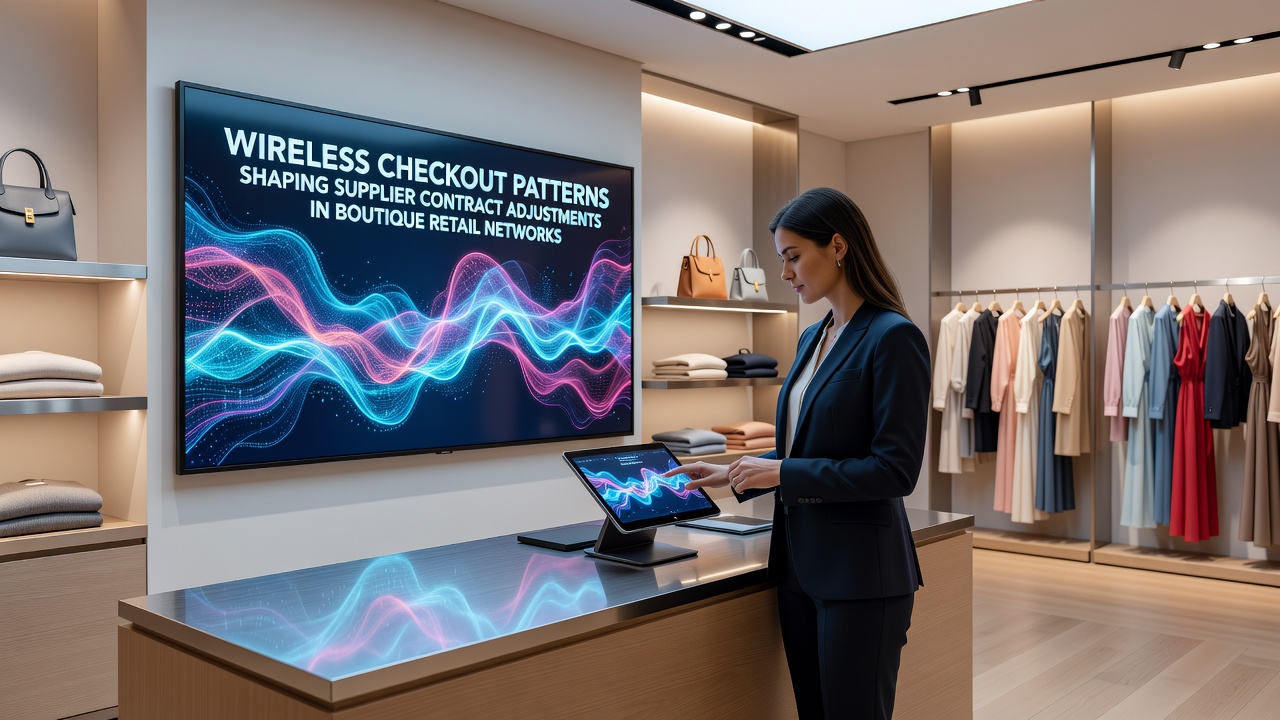
Boutique retail networks have adopted wireless checkout systems at increasing rates since 2023, and transaction data from these portable terminals now feeds directly into supplier negotiations across multiple product categories. Retail analysts note that patterns in wireless transaction volumes, timing, and product mix provide granular insights that suppliers use when renegotiating delivery schedules, minimum order quantities, and promotional allowances.
Wireless devices capture real-time sales information without fixed counter constraints, which allows boutique operators to track customer preferences during pop-up events, seasonal markets, and multi-location transfers. This mobility generates datasets that differ from traditional point-of-sale logs because they include location stamps, staff movement patterns, and peak-hour clustering that stationary systems rarely record with equal precision.
Data Streams from Mobile Terminals
Suppliers receive aggregated wireless checkout feeds through shared portals or third-party analytics platforms, and these feeds reveal hourly sales velocity for specific SKUs across boutique clusters. In June 2026, several mid-sized networks in North America reported that their wireless systems processed over 65 percent of daily transactions, according to figures compiled by the National Retail Federation. The resulting data sets highlight correlations between foot traffic surges and inventory depletion rates that stationary registers often under-sample.
Contract clauses increasingly reference these wireless-derived metrics, which means suppliers adjust replenishment lead times based on observed sell-through speeds rather than quarterly forecasts alone. Boutique managers report that contracts now contain performance triggers tied to wireless scan accuracy and transaction completion rates, creating measurable benchmarks for both parties.
Inventory and Ordering Adjustments
Wireless checkout patterns allow suppliers to identify underperforming items faster because portable terminals record sales at the exact moment merchandise leaves the sales floor. One European boutique collective documented a 22 percent reduction in overstock returns after suppliers began using wireless transaction heat maps to calibrate weekly deliveries. This shift occurs because suppliers can monitor regional demand spikes during festivals or local events that traditional weekly reports miss.
Contract language has evolved to include dynamic minimum-order thresholds that rise or fall with wireless-tracked velocity. When wireless data shows consistent evening sales spikes at multiple boutique locations, suppliers shorten delivery windows and offer volume discounts that were previously reserved for larger chains. Observers note that these adjustments reduce stockouts during high-traffic periods while limiting excess inventory carrying costs for the retailers.

Regional Variations in Contract Terms
Boutique networks operating across borders encounter different regulatory expectations around data sharing from wireless systems, and these differences appear in supplier agreements. Australian retailers, for instance, integrate wireless checkout exports with mandatory consumer protection reporting, which suppliers incorporate into pricing schedules that reflect compliance overhead. In contrast, Canadian boutique groups often negotiate data-sharing terms that limit supplier access to anonymized aggregates only, a practice documented in recent industry summaries from the Retail Council of Canada.
Suppliers respond by offering tiered contract options that vary the depth of wireless data access against pricing incentives. Networks that grant fuller access receive earlier notification of upcoming product launches and more flexible return policies, whereas those preferring stricter data boundaries accept standard terms without additional concessions. This differentiation has become standard in supplier discussions since 2025.
Promotional and Exclusivity Provisions
Wireless checkout data also informs exclusivity arrangements because suppliers can verify that boutique partners maintain agreed-upon product visibility during targeted campaigns. Contracts now reference wireless scan counts as evidence of promotional execution, replacing older reliance on manual shelf audits. When wireless records confirm that a featured item achieved projected transaction shares within a defined window, suppliers extend co-marketing funds or grant temporary exclusivity on new releases.
Researchers tracking boutique supply chains have documented cases where wireless pattern analysis led to revised penalty clauses for non-performance. Instead of fixed fines, agreements incorporate sliding-scale adjustments based on the percentage of wireless transactions captured during the promotional period. This approach aligns supplier expectations more closely with actual customer behavior captured at the point of sale.
Technology Integration and Future Patterns
Integration between wireless checkout platforms and supplier enterprise systems continues to expand, with application programming interfaces now transmitting transaction summaries within minutes of each sale. Boutique networks that maintain multiple wireless devices across locations benefit from consolidated dashboards that suppliers access during quarterly reviews. These dashboards replace periodic manual reports and reduce disputes over sales attribution.
Academic studies from business schools in the Asia-Pacific region have examined how wireless data granularity affects long-term supplier relationships, revealing that networks sharing detailed patterns secure more stable pricing over multi-year contracts. The same studies indicate that suppliers use the data to forecast production runs with greater accuracy, which in turn stabilizes inventory availability for boutique partners during peak seasons.
Conclusion
Wireless checkout patterns supply the quantitative foundation for evolving supplier contracts in boutique retail networks, shifting negotiations from static forecasts to live transaction evidence. Data captured through mobile terminals influences ordering thresholds, promotional structures, and exclusivity provisions across North American, European, and Asia-Pacific markets. As integration between wireless systems and supplier platforms deepens, contract terms will continue to reference these patterns as primary performance indicators rather than supplementary notes.